Grade 6 is often where math starts asking more of students. Students start facing longer questions and are expected to show the steps behind their answers, not just write down the result. For many parents, that change becomes clear in homework, quizzes, and the kind of support their child suddenly seems to need.
At Popular Book Company, we see Grade 6 as a key transition year. The skills built here can shape how comfortably students move into middle school and how well they handle more advanced math later on. In most cases, students improve when they get regular practice, clear explanations, and enough repetition to understand where they are making mistakes.
Why Grade 6 Math Builds the Foundation for Future Academic Success
By Grade 6, students are expected to do more than get the right answer. They need to organize their work, choose a strategy, and make sense of multi-step questions without relying on constant prompts. That change can feel significant, but it also gives students a chance to build stronger habits. With the right support, students can strengthen the habits that later math courses depend on.
Some of the major areas Grade 6 supports include:
- fractions, decimals, ratios, and percentages
- geometry, measurement, and coordinate work
- integers, early algebraic thinking, and pattern recognition
- word problems that require planning, checking, and written reasoning
Elementary math often focuses on learning a method and practising it until it feels familiar. Middle school math still needs that fluency, but it also asks students to interpret questions more carefully.
Students have to read more carefully, sort relevant information from distractions, and explain why a method fits the question. Gaps that seem manageable in Grade 6 can follow a student into later units, where every step assumes earlier skills are already in place.
Grade 6 Math Strengthens Core Number Skills
Even as Grade 6 math becomes more complex, strong number sense still supports almost every part of the work. Students need to compare fractions, convert decimals, and recognize whether an answer is reasonable before they can handle larger problems with confidence.
Those skills show up across the curriculum. A sale price question relies on percentages. A data question may involve decimal operations. A geometry lesson can depend on fraction knowledge. Because these ideas carry into so many different topics, weak number skills tend to create problems in more than one unit. The challenge is not just the harder question in front of the student. It is the added strain of managing each step without a solid foundation.
| Skill | Why It Matters Later |
|---|---|
| Fractions and decimals | Support measurement, data, probability, and algebraic work |
| Percentages | Connect to discounts, taxes, grades, and graphs |
| Estimation | Helps students check whether an answer is sensible |
| Basic operations fluency | Keeps multi-step questions from turning into slow, frustrating work |
Questions such as 3/4 + 0.25 or 25% of 80 help students move between related number forms. That flexibility supports later work in data, financial literacy, and algebra.
Students Begin Thinking More Abstractly
Earlier grades often ask students to calculate. Grade 6 starts asking them to look for patterns and decide what steps to take.
A child who is used to solving 7 + 5 may now face a question such as this:
Start at 7 and add 5 each time. What is the 10th number in the pattern? The student still needs the calculation, but first needs to recognize the rule.
That change helps prepare students for later algebra. Patterns, variables, and simple equations ask students to read carefully, notice structure, and apply what they know to different kinds of questions. Regular practice with varied question types helps students get more comfortable doing that.
Multi-Step Math Problems Build Academic Independence
Grade 6 students often face longer word problems that require more than one step. They need a simple process they can return to each time:
- Read the question carefully.
- Underline the key numbers and details.
- Solve it one step at a time.
- Check whether the final answer fits the question.
Showing work helps students stay organized and catch mistakes more easily. These habits also prepare them for later grades, where math moves faster and students are expected to work more independently.
Geometry and Measurement Skills Prepare Students for Advanced Topics
Geometry gives many students a different way into math. Instead of working only with numbers, they begin connecting formulas to shapes, diagrams, and visual patterns.
In Grade 6, that often includes:
- area, perimeter, and volume
- angles, shape properties, and coordinate grids
- measurement questions that require careful use of units
These topics support later work in science and technology. Students start linking formulas to real quantities, graphs to visual patterns, and measurement to everyday problem-solving.
Regular Math Practice Helps Prevent Learning Gaps
Most students do not fall behind because of one difficult lesson. More often, a small misunderstanding stays hidden until it starts showing up in other topics. A student who is unsure about fractions may struggle with decimals and percentages a few weeks later. A child who is shaky on basic operations may understand a word problem but still get stuck carrying out the steps.
Regular practice helps parents and students catch those weak spots before they turn into bigger problems. Short review sessions during the week usually work better than last-minute studying because students have more chances to revisit a skill, correct mistakes, and build accuracy over time. It also becomes easier to see patterns. If the same kind of error keeps appearing, that often points to a concept that needs more attention.
Confidence in Grade 6 Math Supports Better Test Performance
Students usually feel more confident on tests when the question types are familiar. Practice, correction, and review make it easier to stay calm, show work, and keep going through harder questions.
Students who know how to check their work and recover from mistakes are usually better prepared for the faster pace of later grades.
How Parents Can Support Grade 6 Math Readiness at Home
Parents do not need to reteach the classroom lesson to make a real difference. What helps most is consistency, a manageable routine, and a way to notice where a child is doing well or where they may need a bit more time.
A simple home approach can look like this:
- set aside 15 to 20 minutes a few times each week for review
- revisit current class topics while also returning to older skills
- ask your child to explain how they chose an operation or strategy
- treat corrections as part of learning, not as a sign that the practice failed
- connect math to real life through shopping, cooking, schedules, and budgeting
A set routine often leads to fewer arguments because the practice feels expected instead of being brought in only when a test is coming up.
Use Worksheets to Build Consistency
Worksheets are most helpful when they match the specific skill a student is working on. If a class has just covered decimal operations, for example, targeted practice can help a child strengthen that skill before moving on. Worksheets can also be useful for revisiting older topics that still need attention, such as fractions, percentages, or multi-step word problems.
They are especially effective when they include more than one kind of question. A page of direct practice can help students build accuracy, while word problems show whether they can use the same skill in a new situation. That combination gives parents a clearer picture of what their child understands and where extra support may be needed.
At Popular Book Company, our math workbook resources are designed to support this kind of steady review. Used regularly, completed worksheets can become helpful study material before tests and a simple way to refresh key skills at the start of a new unit.
Focus on Understanding, Not Just Memorizing
Memorization still has a place in math. Students benefit from knowing facts and formulas. Still, understanding is what helps them handle unfamiliar questions.
A few simple questions can help at home:
- How did you know which operation to use?
- Can you show another way to solve it?
- What part of the question told you what to do first?
These conversations can show whether a child understands the idea or is relying on a method they do not fully understand.
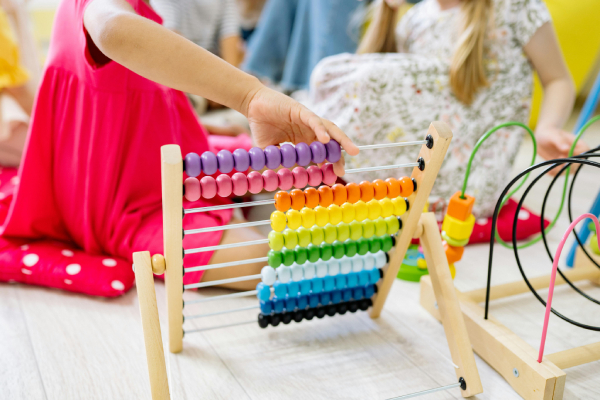
Visual tools can make a big difference here, especially for students who understand a concept more easily when they can see it on a number line, diagram, or model.
Grade 6 Math Practice Can Help Students Prepare for What Comes Next
Strong skills in grade 6 math can help students feel more prepared for middle school, calmer during tests, and more confident when new concepts start building on earlier ones.
With regular review and steady practice, children have a better chance to strengthen weak areas before they turn into larger problems. At Popular Book Company, we have been publishing learning materials since 1994, and our MathSmart workbooks are available for students from preschool through Grade 12.
For families looking for extra support at home, these resources offer a clear, structured way to keep practice consistent. Reach out to Popular Book Company today at (905) 731-9827 ext. 102, email us at ca-info@popularworld.com or click here to get in touch online.
Grade 6 Math Questions Parents Ask Most
Why Is Grade 6 Math So Important?
Grade 6 math connects earlier number skills with the more demanding reasoning students will face in middle school and high school. It supports confidence, accuracy, and the ability to work through problems more independently.
What Math Skills Should a Grade 6 Student Practise Most?
Fractions, decimals, percentages, ratios, geometry, measurement, integers, and multi-step word problems all deserve regular attention. These topics show up again in later grades, often in more advanced forms.
How Can Math Worksheets Help With Grade 6 Math?
Math worksheets give students focused practice on one skill at a time while also giving parents a clearer view of where support is needed. They can be useful for review after school, before quizzes, or during breaks between units.
How Often Should Students Practise Grade 6 Math at Home?
Short, consistent practice usually works better than occasional long study sessions. A few review sessions each week can help students retain what they learned in class and feel more settled before tests.
What Should Parents Do If Their Child Struggles With Grade 6 Math?
Start by identifying the topic that is causing trouble, then use structured practice to work through it slowly. Asking your child to explain each step can reveal where confusion begins. If the problem continues, it can help to speak with the teacher and use additional learning resources for support.